Chagos Marine Reserve (British Indian Ocean Territory) - second anniversary progress report
5th January 2012
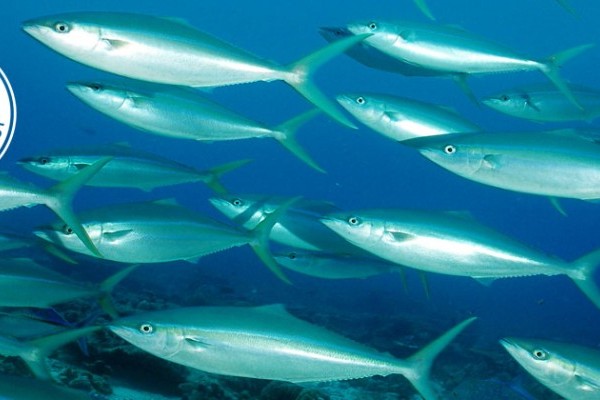
British Indian Ocean Territory marine reserve – second anniversary
This is a summary of some of the achievements of the Chagos Marine Reserve during its second year of operation (April 2011-April 2012). It was a year which has seen significant progress in developing and prioritising the necessary scientific research to support the conservation and long-term management of the Chagos marine reserve. Crucially, too, there has been a dramatic increase in the interest and involvement of the international scientific community in research relating to the Chagos archipelago.
Science
A full-day seminar on science in the Chagos was held in November 2011 at the Linnean Society, which attracted a sizeable number of UK and international experts. Professor Charles Sheppard FLS, organiser of the event, kicked-off the meeting with an overview of the ecological research carried out over the years, including his recent research on the fast recovery of much of Chagos’ coral reef ecosystem following an intense period of ocean warming and subsequent coral bleaching in 1998. The Archipelago’s resilience to the impacts of ocean warming, which have detrimentally affected other coral reefs globally, is thought to be due to the exceptionally good condition of its marine environment.
Presentations from international scientists demonstrated the following:
In February and March 2012, a scientific research expedition of twelve UK and international scientists visited Chagos. Their research prioritised the continuation of long-term monitoring programmes as well as establishing the best and most resource-efficient methods to monitor and manage the reserve. In particular the research included:
As well as achieving important scientific work, the expedition generated welcome press coverage, which highlighted the importance of the marine reserve.
A new research programme has been developed by the Zoological Society of London (ZSL) with the University of Western Australia this year to develop non-destructive monitoring approaches for open ocean fish species (primarily sharks and tuna). This will contribute to understanding the effects of Chagos and other large marine reserves on these highly migratory fish. The approach is based on using baited underwater cameras and is adapted from the method used highly successfully on the ocean floor during the 2012 expedition. This month sees the field trials of the first of these camera systems off Dirk Harthog Island, Western Australia, with plans for a follow-up expedition later in the year to trial the first pelagic monitoring programme in Chagos. This research is funded by Defra, the Blue Marine Foundation and the Waterloo Foundation.
During the year, the UK Government’s Darwin Initiative made available a grant of £287,788 for a greatly expanded reef-based scientific programme. Led by Dr John Turner of Bangor University, Dr Heather Koldewey of ZSL and Prof Charles Sheppard of Warwick University, this major grant has enabled three large expeditions to be planned and funded over the coming three years. Since the marine reserve was designated, the level of scientific interest and funding for Chagos research has increased many times over and seems likely to grow further.
Enabled by a generous bequest by Commander John Topp, founder of the Chagos Conservation Trust, Colin Clubbe of the Royal Botanic Gardens, Kew, has started work on developing a programme of botanical surveys of the islands, which are likely to be initiated as part of expeditions funded by the Darwin Initiative.
Working with Chagossians
The BIOT MPA was created “without prejudice” to the outcome of the legal processes relating to Chagossians and conservation arrangements could be modified if necessary in the light of a change in circumstances. This year, Allen Vincatassin, Leader of the Diego Garcian and Chagossian community in Crawley, and colleagues participated in a habitat restoration project at Barton Point in Diego Garcia. Pascaline Cotte, who had previously participated in a Coral Cay Conservation reef conservation training programme funded by Chagos Conservation Trust, took part in the February/March 2012 research expedition as an assistant scientist and was trained in a number of research skills, including a variety of underwater survey methods.
Following consultation with Chagossian leaders and key NGOs, the FCO have provided funding for an environmental outreach programme for Chagossian groups and others within the UK. Launched this month, this programme will see opportunities for the Chagossian community to participate in open days and/or participate in a more focused education programme. A successful pilot environment open day held at ZSL London Zoo was attended by over 70 members of the Crawley Chagossian community of all ages. If the take-up on this is positive and subject to further funds being made available it is hoped to extend this community work to Mauritius and the Seychelles. The Darwin Initiative grant also includes opportunities to provide relevant training to Chagossians, building environmental awareness and capacity.
Science Advisory Group
The Foreign and Commonwealth Office has established a Chagos Science Advisory Group to advise on a science strategy and priorities for BIOT, and encourage research. This group has met twice, in May and November 2011. Dr David Billet of the National Oceanography Centre, Southampton is its chairman. Other members are Prof Barbara Brown, Prof Graeme Hays, Prof Callum Roberts, Dr Carol Robinson, Prof Alex Rogers, Prof Charles Sheppard, Prof Sandy Tudhope, Dr Phil Williamson, Prof Philip Woodworth, and Prof Ian Wright.
In addition, representatives of the CCT have been actively engaged with the Big Ocean Network, a global initiative for those dealing with research and management of very large marine reserves.
Bird guide
During the year “A guide to the birds of the British Indian Ocean Territory” by Pete Carr was published.
Enforcement
The Pacific Marlin, Chagos’ patrol vessel, continued its active patrols of the reserve against illegal fishing. During the course of the past year a dozen vessels were caught and prosecuted for illegal fishing in the reserve.
The Chagos Conservation Trust is delighted to welcome its intern for the 2026-2027 academic year, Elisha Gough.
Read the storyUnder the watchful eyes of Charles Darwin’s painting, Director Sarah Puntan-Galea presented the annual Chagos Conservation Trust Speaker Event to a packed hall at the Linnean Society of London on 14 May 2026.
Read the storyWe were delighted to launch our new website at our recent Annual General Meeting, where our members were given a live walk-through by Filip Hnizdo from Octophin Digital who assisted our Director, Sarah Puntan-Galea, in the creation of the new site.
Read the story