Protecting a treasure
In a world ravaged by destruction and exploitation, the Chagos Archipelago is a pristine and important marine environment.
Working with partners, we are always politically neutral, and have the sole aim of preserving all 55 islands and 60,000km of reefs for the many species that call it home, and for future generations.
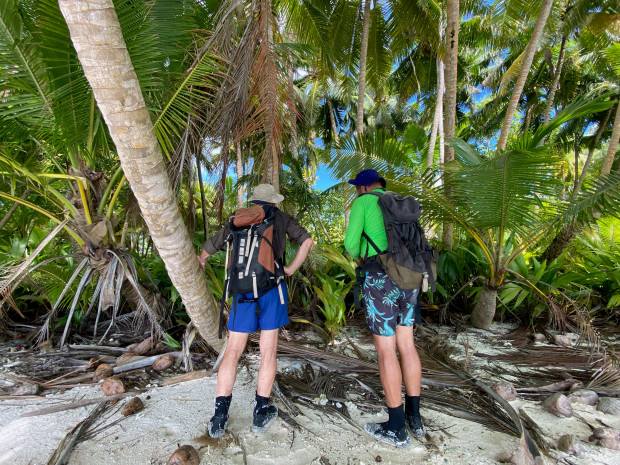
To ensure the globally important natural environment of the Chagos Archipelago is well protected, conserved and understood, inspiring the better management and protection of our planet.
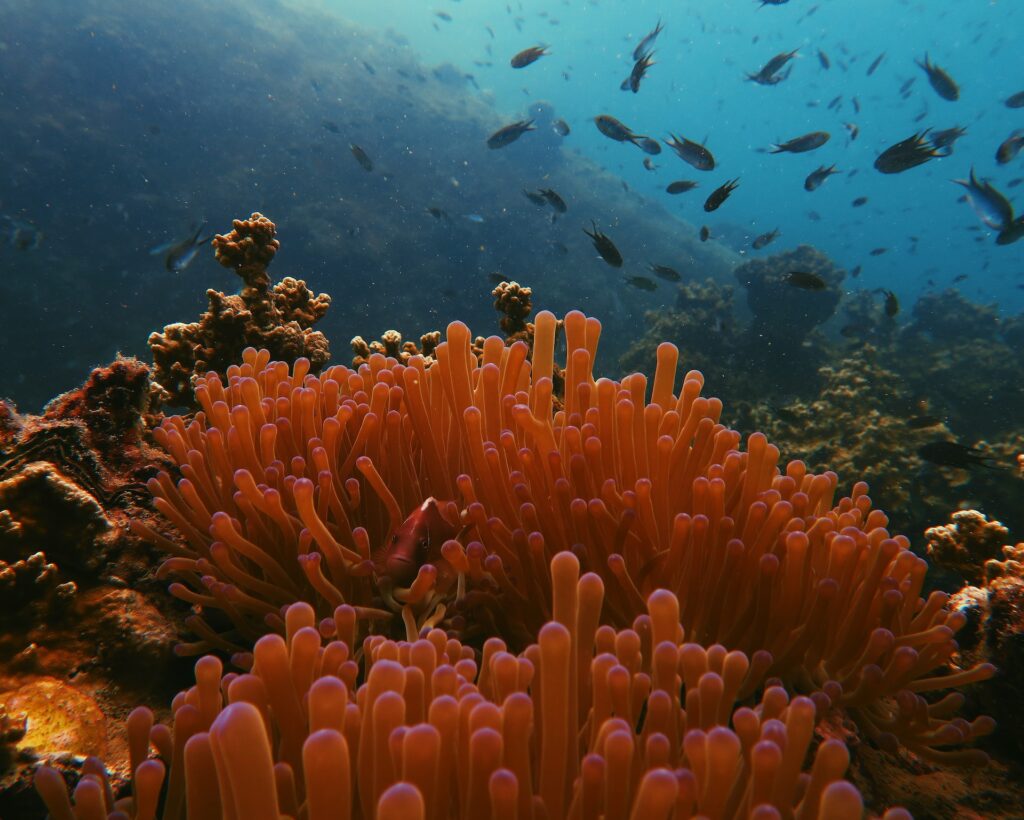
To promote and conduct scientific and historical research and environmental conservation work in the Chagos Archipelago, and strive to advance international understanding of the global environmental importance of the area, to ensure its protection for the wider public benefit.
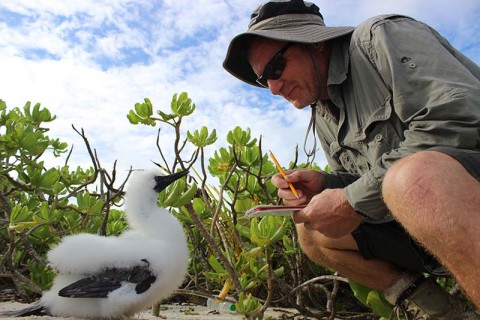
It is the voices of passionate citizens that will protect this archipelago for years to come.
By sharing knowledge and understanding, we aim to convince people of the islands’ value to the world.
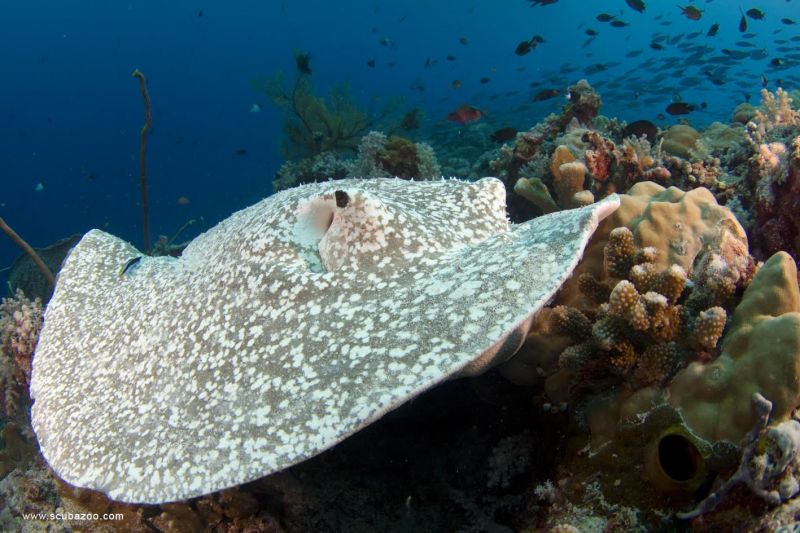
Building our voice
We want to be an enduring voice of support for the archipelago for years to come.
By building a solid organisation, we can maintain and strengthen our role as a leading protector, researcher, and educator in this area.
The story of CCT
The Chagos Conservation Trust (CCT) - named Friends of the Chagos until 2002 - is founded by Commander John Topp OBE (the first CCT Chair) and Professor Charles Sheppard OBE after being inspired to protect the Chagos islands and its wildlife during a 1975-76 scientific expedition. It also aimed to support scientific research, and promote education about the unique archipelago.
Together with Professor Sheppard, Commander Topp launches a major scientific expedition to the archipelago. It involved 30 scientists, technicians and PhD students, and documented 59 new fish species, but records an alarming decline in shark abundance, see: John Topp's Report.
Former Indian Overseas Commissioner Nigel Wenban-Smith becomes CCT Chair.
Further expeditions to the archipelago record a mass bleaching of shallow-water coral across the islands, and draw attention to warming sea surface temperature.
Another former Indian Overseas Commissioner, William Marsden, becomes CCT Chair.
The outgoing Chief Scientific Advisor, Dr Sheppard, and incoming, Dr Mark Spalding, publish the first Chagos Conservation Management Plan.
The Plan calls for the protection of at least 30% of the archipelago, the establishment of a scientific advisory group to oversee regular monitoring, and the permanent assignment of a sea vessel for the task.
CCT starts publishing a series of booklets about Chagos wildlife.
Professor Sheppard leads a second major expedition to the Chagos Archipelago to observe the long-term recovery of coral, following the 1998 mass bleaching.
CCT leads the formation of the Chagos Environment Network (CEN), an alliance of conservation organisations concerned with the conservation of the Chagos Archipelago. It submits the first report highlighting the urgent need to protect the islands to the UK Government, launching a campaign to encourage the UK Government to declare Chagos a fully protected marine reserve.
The US arm of CCT was devolved and established after an MOU was signed between UK CCT and the original US-CCT Board: Dr Sam Purkis (Chair), Carol Garner (Secretary), Stephen Snell (Vice-Chair). US-CCT's first-ever member, Ted Morris, is the current Chair.
The UK Government declares the Chagos Archipelago and the surrounding 650,000km2 of the British Indian Ocean Territory (BIOT) a marine protected area after lobbying by the CEN which was led by CCT and funded by the Pew Charitable Trust, making it the largest no-take marine reserve in the world.
CCT founder, Commander Topp, passes away and leaves a sum of money to start the 'CCT John Topp Botanical Fund' which has funded important vegetation research since.
In collaboration with the Zoological Society of London, CCT launches Connect Chagos to engage the UK Chagossian community in the conservation of the archipelago through outreach events and marine conservation training, to enable qualified Chagossians to participate in scientific expeditions. Professor Sheppard becomes CCT Chair.
The Darwin Initiative Project was launched to strengthen the MPA, and led by CCT Chair, Professor Sheppard, and Trustees Dr Heather Koldewey and Nigel Wenban-Smith which created a monitoring strategy for coral reefs and island systems.
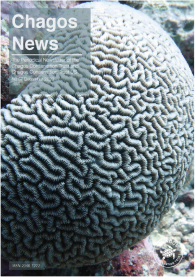
An increase in scientific expeditions, with funding coming from many sources including the UK Government, brought hundreds of scientists to the Chagos to study its precious and unique wildlife, plus record water temperature and sea level rises, and further coral bleaching events. Research highlights the serious issue of plastic pollution and the decline of the Chagos brain coral.
CCT appoints its first paid employee: Director, Helen Pitman.
Chagos: A History by former Commissioner to BIOT and CCT Chair, Nigel Webban-Smith, and Dr Marina Carter, is published by CCT.
The Chagos Information Portal, known as ChIP, is launched. Funded by the John Ellerman Foundation, it is a reference library of work conducted in the Chagos Archipelago, including interactive maps, videos, photos and datasets.
Following the first successful eradication of black rats on Vache Marine, and research directly linking the presence of seabirds to the health of coral reefs, CCT launches Healthy Islands, Healthy Reefs (HIHR): A nature restoration programme that will restore 30 islands, rewilding abandoned coconut plantations and removing invasive rats, to increase available habitat for nesting seabirds and aid coral reef health.
HIHR will also restore areas of historic importance to the Chagossian community.
CCT employs its second staff member to project manage HIHR: Dr Pete Carr, author of the Birds of the Chagos book. And appoints its first Chagossian community member to its Board of Trustees: Jean-Francois Nellan.
CCT engages Sarah Puntan-Galea as Director, who launches a new five-year strategy, with a refreshed vision and mission.
CCT is recognised as an Actor for the United Nations Decade of Ecosystem Restoration due to its key rewilding project HIHR, joining a movement of like-minded organisations working to restore degraded ecosystems around the world.
Chris Davies, previously a Royal Navy British Representative to the islands, is elected CCT Chair.
Pascalina Nellan is employed part-time to run the Chagossian community website CCT helped create.
CCT took on their first intern: Martina Reina-Canitrot, a marine biology student from Swansea University.
CCT started online members' talks presented by the CCT Director, Sarah Puntan-Galea. The first talk, 'Scaling coral reef conservation: Biodiversity Assessment from Orbit' was given by Professor Sam Purkis, founding Chair of US-CCT.
The Trust launched its Youth Ambassador scheme, and named its first-ever Youth Ambassador Martina Reina-Canitrot..
CCT were awarded nearly £1million in Darwin (Plus and Local) funding from the UK Government for three Healthy Islands, Healthy Reefs projects. Led by Project Manager Pete Haverson, a month-long expedition to the Chagos took place in November to start work on the ground.